Modern racking systemsRacking systems are widely used in various industries, logistics and trade, agribusiness, as well as in private estates.
Racking systems are systems of special designs designed for placement and storage of large volumes of products, goods and stocks.

< br />
Shelving systems are divided into several types:
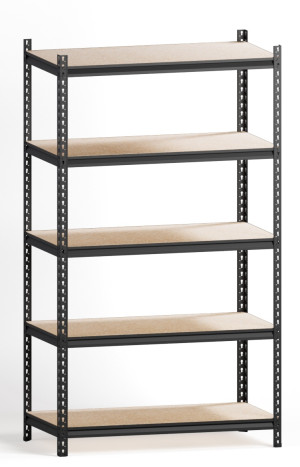
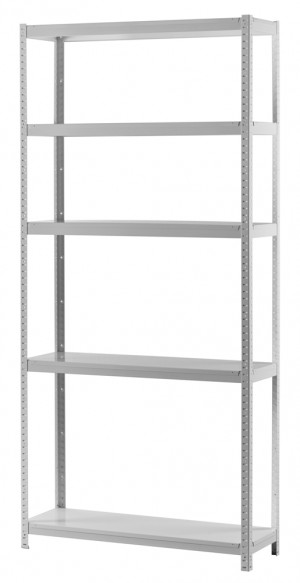
- Shelving for household and office use.Usually, shelving included in this product group is easy to assemble and does not require special tools and requirements for the room where they will be used. Office racks and household racks are used to place documents, product samples, household items, food stocks, household appliances, small spare parts for a personal car, tools. Racks for home and office racks are usually simple in design, easy to assemble and disassemble. The maximum load of such racks does not exceed 80-100 kg. distributed load on 1 shelf. Shelving for the home is usually made using painted shelves, galvanized shelves, laminated or sanded chipboard shelves. The height of such racks rarely exceeds 2.5 meters.

The racks are completed with:
1. perforated racks with the ability to assemble the structure without the use of bolts and nuts - this speeds up the installation and dismantling of racks. Racks are made in galvanized or painted version;
2. A set of shelves placed on the longitudinal and transverse strips of the shelves. Shelves are usually made of galvanized or painted metal, or use 16 mm chipboard. laminated or sanded;
3. Racks are equipped with metal or plastic thrust bearings, the task of which is to redistribute the point load on the floor over a large area and prevent damage to it when the rack is moved. In the case of fastening racks in one line or in two parallel rows, special sets of rack fasteners are used between themselves.
- Professional shelving systems for manual handling (without the use of heavy warehouse equipment). Huge scope of use of shelving systems for professional manual storage.
Here are just some of the uses of professional manual shelving such as:
- shelves for service stations
- shelving for grocery stores
- racks for electrical equipment
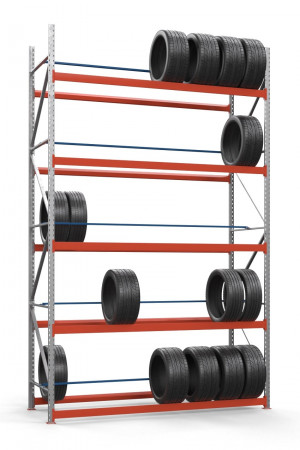
- racks for tire shops
- shelving for grocery stores
- racks for non-grocery stores
- shelving for production
- racks for workshops for household services
- racks for mushroom farms
- racks for greenhouses and greenhouse complexes
- shelving for wholesale depots
- racks for equipment placement
- tool racks
- shelves for archives
- furniture racks and more...
Shelving for professional use with manual handling of goods is the most common, so they have many modifications.

Such shelving includes the following main components:
1.Vertical frames with a permissible maximum load of at least 2000 kg. Frames are made both in galvanized and painted form.
Shelving frames include details such as:
- racks (they have special perforations for attaching other rack elements to them, the frames are made of steel sheet, which is bent at different angles during production to increase the rigidity of the rack);
- crossbars (connecting elements between the uprights at right angles to them, made of steel and in the form of a rectangular profile or pipe in section);
- Jobs (as a rule, they are made in the same way as the crossbars, but have a much longer length, connect two posts to each other at oblique angles)
- foot pads (made from hardened steel to evenly distribute the point load of the rack over a wider floor area
2. Cross beams with a permissible maximum load of at least 400 kg. The cross beams are manufactured both in painted and galvanized form. These parts differ in length and have special hooks along the edges for attaching to the frame through perforated holes.
3. Shelves of professional shelving for manual maintenance are usually made of materials such as:
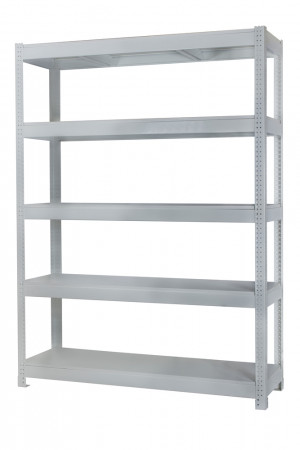
- Galvanized steel. These shelves are stackable. Their number is selected according to the length of the transverse beam in multiples up to a given length. These shelves - hardy and optimal for storing liquid products, where there is a risk of leakage, aggressive substances, metal parts without packaging, are used in medium and low temperature climatic chambers.
- Painted metal. These shelves are also type-setting. They are used for placement and storage of goods packed in cardboard packaging, placement of tires (in the form of tire racks), fabrics, packaged dry building materials, packaged auto parts, drinks, food, etc.
- Sanded chipboard. The cheapest and most democratic option for choosing shelves. In addition, it is the most practical in terms of easy replacement over time with new cut shelves in any workshop. Typically, chipboard shelves are used to store a wide range of goods. It is not recommended to use racks with such shelves in cellars and basements with high humidity, for storing liquid and aggressive products with the possibility of their leakage.

Buy shelving for home use, in offices, shelving for professional use and storage of large volumes of products can be measured by measuring the area and height of the room, deciding which type of shelving is best to work with.
The price of warehouse shelving is formed based on several factors:
1 . Shelving parameters: allowable load, scope of use, etc.;
2. Shelving material: galvanized steel, painted steel, with stacked galvanized shelves, stacked painted shelves, with chipboard shelves;
3. Shelving dimensions: height (due to the possibility of servicing at such a height of the upper shelf), depth (based on the possibility of having access from one or both sides, taking into account the overall dimensions of the goods, etc.), width of the rack / span (it should be borne in mind that with an increase in the width of the span (beams), the maximum allowable load on the shelf decreases)
4. Shelves material (galvanized or painted steel, polished chipboard shelves - depending on the type, quality, aggressiveness, characteristics of the stored products and also on the characteristics of the environment)
5. The need to use additional devices, tools, professional installation and fastening to the floor.
It is worth remembering: professional storage racks must be mounted by experienced professionals with the appropriate tools and in special clothing and footwear suitable for use at heights.