


Due to the growing share of competition in the market, attracting the attention of your target audience – one of the most effective ways to promote. Proper interaction of the product with the buyer at the point of sale increases the likelihood of its purchase. To implement the task, there is a whole range of activities, for which a separate marketing direction is responsible – merchandising.
What is merchandising
To increase the percentage of sales, companies develop their own strategies, which are implemented in various ways. At points of sale, special attention is paid to the location of products, informing visitors about the benefits of the product, working out its attractiveness against the background of competitors' offers, etc. All events pursue the main goal – influence the decision of the visitor of the outlet to purchase their product.
Merchandising – this is a separate vector of work, a marketing strategy aimed at stimulating sales in retail. With its help, conditions are created for optimal interaction between the client and the company's product. Qualitatively performed actions in this direction can significantly increase the percentage of sales, which has been proven by numerous studies. For example, 75% of shoppers make a purchase decision while in front of a shelf in a store. If you present your product correctly at this moment, then the probability of choosing in its favor increases. It is this task that merchandising – stimulates to buy using various tools of influence.
Target goals:
All of them are achieved by organizing a whole range of activities, the development of which requires preliminary preparation and preparation of a strategy and methods of implementation.
Merchandising Tasks
Properly set tasks will help you achieve your goals. To promote and grow sales, you need:
Completing these tasks will increase sales, as well as track the place of your product in the list of other offers.
Attention should be paid to the communication interaction. It is communication with customers through the external design of the product, its placement on the shelf that makes it possible to influence the decision to purchase and, as a result – to increase sales.
Tools used by merchandising in their work:
Development of – the task of marketing, which knows the right methods of influencing consumers, using non-verbal means of communication.
Rules, principles of product placement
The way the products are placed on the shelf, in what part of the hall it is located, in what product neighborhood, directly affects the level of sales. Manufacturers who are aware of this fact take the issue seriously, developing a complete strategy for the placement of their range.
Methods by which company representatives can influence the buyer on the trading floor:
When implementing the methodology, it is necessary to correctly select and apply the means to be used. This includes objects and design that can influence the attention of the buyer, attract and keep him at the shelf with products, and motivate him to purchase. They are divided by location into internal and external.
External merchandising tools:
Internal tools:
The purpose of posting such materials – remind the visitor of the existence of such a trademark and its presence on the shelves in this network. At the same time, it is important not to overdo it with the amount of advertising and adhere to a number of rules:
It is also necessary to take into account the peculiarities of laying out products on the shelves. 3-5 shelves are considered optimal for the consumer. They are at "eye level". If the target audience is younger, then it is advisable to lower such a product one shelf lower so that it is accessible to its consumer. There are other principles, the application of which helps in indirect sales:
Each approach should be used thoughtfully, having previously tested the marketing technique and obtained data on its effectiveness for a particular product or brand. A detailed development of the layout planogram will help with this.
There are a number of principles for displaying products on store shelves that have already proven their productivity in practice:
Taking into account the basic principles and recommendations, do not forget about the features of a particular proposal, and it is taking into account its strengths to develop a promotion methodology. Also, it is important to choose the right equipment for product display and how to design it.
Product display equipment
Retail chains and individual stores use various types of equipment to demonstrate products. The design option and how it is designed directly affect the appearance and attractiveness of the product that is placed on them. Commercial equipment plays the role not only of rational placement of goods, but is also used as a tool for merchandising. For the display of goods, the following types of equipment are used:
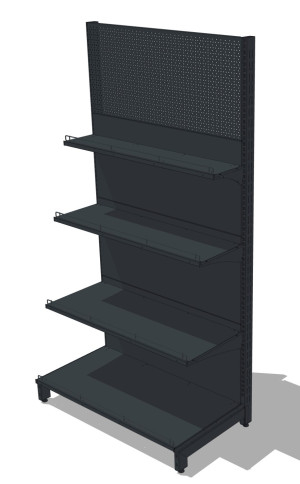
Use of trade equipment in merchandising – sound and proven method of interacting with customers. It allows you to achieve the main goals – sales growth and, as a result, optimization of the trading system as a whole. The acquisition of quality equipment opens up opportunities before marketing events and merchandising – including.
Company "OLTEBA" - a reliable partner in the field of selection, supply and installation of commercial equipment, including for advertising and other events aimed at interacting with store visitors. We will help with the choice of equipment that is best suited for demonstrating goods in the trading floors. We use an individual approach to each client, which contributes to the selection of equipment that best meets all the requirements of the customer. We carry out installation and maintenance of equipment, we offer modern models at affordable prices. Feel free to contact us!

